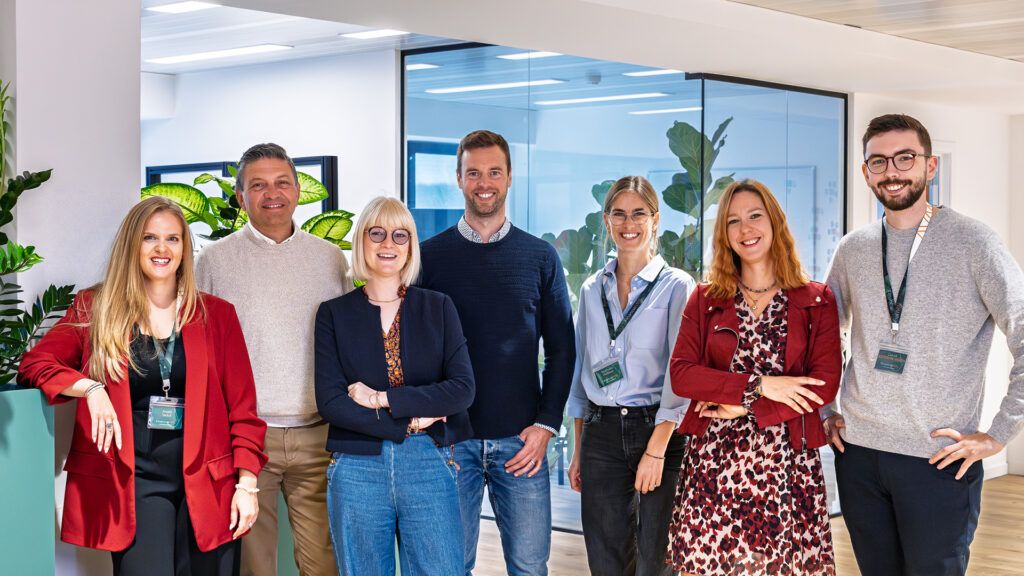
Key Insights for SME Managers - May 2026 Edition
This edition puts into perspective several strategic developments that are currently reshaping the environment of Belgian SMEs: financial governance, company transfers, entrepreneurial dynamics and changes in the tax framework.
1. Split CFO – A role that becomes essential before strategic decisions are made
Most SME managers reach a point where financial decisions have real consequences – without feeling that the company is big enough to justify a full-time CFO. The mistake is to ask the question in terms of size. The real trigger is complexity: the level of transformation, growth or strategic pressure the company is currently under.
An acquisition under consideration. Fund-raising in progress. A sale approaching. At each of these moments, entrepreneurs need more than accounting support – they need a financial compass that provides structure, visibility and strategic perspective before decisions are made, not after they’ve been made.
Full-time CFO vs. split CFO – what’s the real difference?
A full-time CFO means a six- to nine-month recruitment process, a salary package of €120,000 to €200,000+ per year, and an ongoing organizational commitment. It’s a model suited to large companies whose financial operations are continuous, complex and require senior supervision on a daily basis.
The fractional CFO operates according to a different logic: one or two days a week, integrated into the company, focused on the phases that really require senior financial expertise – and in retreat once the moment has passed. No recruitment lead time. No permanent, fixed workload. The same strategic quality, at a fraction of the cost of a permanent CFO.
The distinction is important because SMEs operate in cycles: periods of relative stability punctuated by moments of significant complexity. The full-time CFO is designed for sustained demand. The fractional CFO is designed for inflection points.
2. The great Belgian entrepreneurial transfer is already underway
The figures speak for themselves. Belgian family businesses account for 77% of employing companies and 45% of total employment – making business transfer a macro-economic issue, well beyond the family framework. This trend is already underway.
In Europe, some 450,000 companies change hands every year, involving over 2 million employees. However, up to a third of these transfers fail due to a lack of preparation, putting nearly 150,000 companies and 600,000 jobs at risk.
The phenomenon is structural. BNP Paribas Fortis identifies Belgium as part of the “great transfer”: a historic redistribution of wealth driven by the baby-boom generation. Worldwide, more than $84,400 billion in assets are expected to be transferred by 2040.
On the corporate side, Vlerick’s M&A Monitor confirms that in Belgium, many managers are now initiating their transfer before retirement, due to demographic pressure rather than strategic choice.
The consequences of inadequate preparation are well known: undervaluation, weak governance, financing constraints or avoidable tax exposure. At the same time, expectations are evolving: transparency, professional governance, digitalization and the integration of ESG criteria are becoming the norm.
The opportunity is real for Belgian SMEs – but time is of the essence. A well-prepared transfer creates greater value, continuity and stability.
- European Commission / Global Solutions Initiative – EU business transfers
- BNP Paribas Fortis – The Big Transfer
- Vlerick M&A Monitor 2025 (12th ed.)
3. Walloon entrepreneurial ecosystem – Spring 2026 update
A dynamic and inspiring spring for Liège’s startup community – three events brought together founders, mentors, investors and ecosystem partners around a shared conviction: Walloon entrepreneurship is alive, ambitious and deserves to be supported.
VentureLab Belgium – Road to Business 2026. VentureLab’s flagship program welcomed over 50 young entrepreneurs from Belgium and Quebec for an immersive experience in Liège. Participants visited companies such as Loterie Nationale, EVS, Defensio and WE, while developing essential entrepreneurial skills such as pitching, strategic thinking, networking and project presentation. A fine illustration of the Franco-Belgian bridge in entrepreneurship and the value of practical exposure for the next generation of founders.
Start it Accelerate | @KBC – Demo Day, La Grand Poste Over 180 startups, mentors, investors and ecosystem partners gathered at La Grand Poste in Liège for the Start it @CBC Demo Day. Eight startups pitched their projects to a large audience and a panel of industry experts and professionals. Financial Way was present as a support partner, available to accompany founders on issues of financial structuring, governance and growth strategy.
BNI Neupré – Opportunities – Information Way joins the network. Bastien, from Information Way, has joined BNI Neupré, a member group of the BNI network – the world’s leading business networking organization. This involvement strengthens Information Way’s presence within the local SME ecosystem and creates a structured weekly framework for connecting regional entrepreneurs. There are still a few places available – if you’re in the area and would like to find out more, please don’t hesitate to contact Bastien directly.
4. Executive compensation in 2026 – What the tax reforms mean in practice
Shareholder-managers of Belgian SMEs are facing one of the most significant changes in remuneration structuring in recent years. A series of tax reforms introduced between late 2025 and early 2026 is gradually redrawing the balance between salary remuneration, dividends and reserve strategies.
Salary – stricter access to the reduced corporate tax rate: According to the current draft reform, the minimum executive remuneration required to benefit from the reduced corporate tax rate of 20% would rise from €45,000 to €50,000 (indexed), while benefits in kind would be limited to 20% of the overall remuneration package. Companies failing to meet these conditions could lose access to the reduced rate on the first €100,000 of taxable profit – a significant impact for SMEs. At this stage, however, these measures have not yet been definitively adopted.
VVPRbis & liquidation reserve – a shrinking tax advantage: The government is also planning to increase the reduced withholding tax rate for the VVPRbis scheme from 15% to 18%. A similar increase is envisaged for liquidation reserves, increasing the effective taxation of future distributions. Although these schemes would remain more advantageous than the standard 30% withholding tax, the tax gap is gradually narrowing.
The timetable for implementation remains uncertain, and several measures have already been postponed or adjusted.
For shareholder-managers, the message is clear : compensation, dividend and reserve strategies can no longer be approached as fixed optimization structures. The challenge now is to plan proactively, in line with corporate governance and the changing tax environment.
Partager l’article sur